
Our Heritage
Since 1949, shaping the future of agrotextiles
Three generations. One factory in Pego, Alicante. The same conviction: manufacturing the best agrotextiles for global agriculture.
EU
Who We Are
Leading Spanish manufacturer of agricultural textiles
Textil Villa de Pego, S.L. — also known in the industry as Textil Villa or Textil Pego — is a Spanish agrotextile manufacturer based in Pego, Alicante. A family business founded in 1949, it has been made in Spain ever since. Our textile factory in Pego produces protection netting (anti-hail, shade, windbreak, anti-insect, bird netting, ground cover / weed barrier), leno mesh bags, woven polypropylene raffia bags, storage silobags and installation accessories. We are one of the few European manufacturers integrating the production of nets, bags and silobags under one industrial plant.
We are a vertically integrated manufacturer: in-house extrusion of our own monofilament and raffia, our own weaving plant and in-house making-up (confección). This lets us control every stage of the production process, from raw material selection and yarn extrusion to weaving, finishing and packaging. This vertical control guarantees full traceability of every product and the ability to manufacture custom solutions.
Our Journey
over 77 years manufacturing for agriculture
The story of Textil Villa de Pego is the story of Mediterranean agriculture. From a family textile workshop in the post-war era to an industrial plant exporting to over 30 countries, each decade has added capacity, technology and expertise.
1949
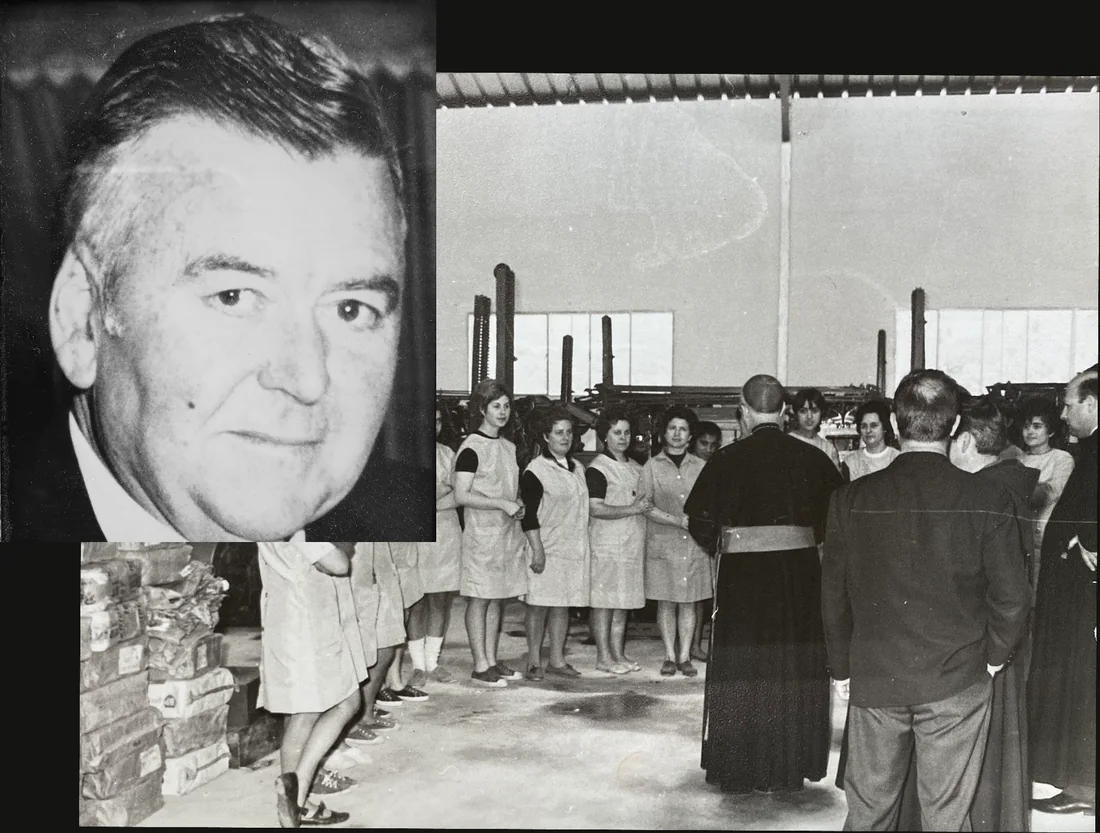
Juan Ortola Siscar, an enterprising and devoted family man, officially established his industry for the production of hydrophilic gauze in 1949. In a world where industry had been left devastated by the ravages of the Second World War, Ortola took the brave decision to meet the growing demand for bandages and medical gauze. His vision and commitment to quality made his company stand out, providing essential medical materials at a critical time.
1964
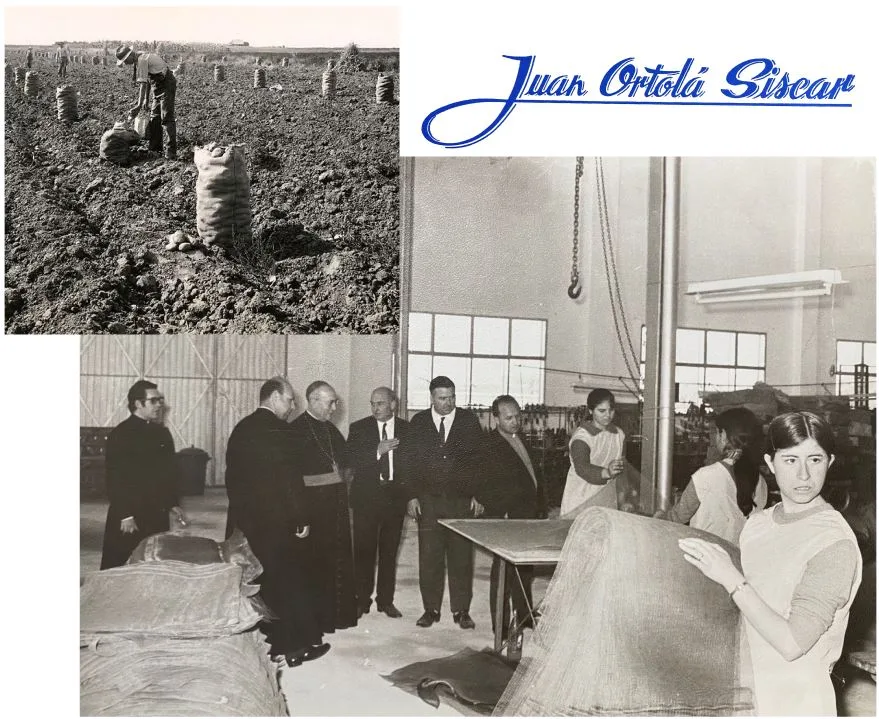
Innovation and adaptability have always been fundamental to success in the agricultural industry, and Juan Ortola Siscar demonstrated both in 1964 when he began manufacturing rayon sacks for packaging peppers. This move marked a significant transformation in his business, allowing him to seize an opportunity in a growing market.
1965
Later that same year, Juan Ortola made another shrewd move by progressively replacing rayon and paper with monofilament and raffia made from polyethylene and polypropylene fibres. This change of material improved the durability and versatility of the sacks, making them even more attractive to farmers and produce traders. This was only the beginning of his expansion into other crops. Soon, Juan Ortola Siscar's polyethylene and polypropylene sacks were being used to package a range of produce, from potatoes and onions to oranges. His ability to anticipate and adapt to the market's changing needs allowed him to develop a diversified product line and expand his business effectively. His story is a testament to ingenuity and entrepreneurial initiative.
1966
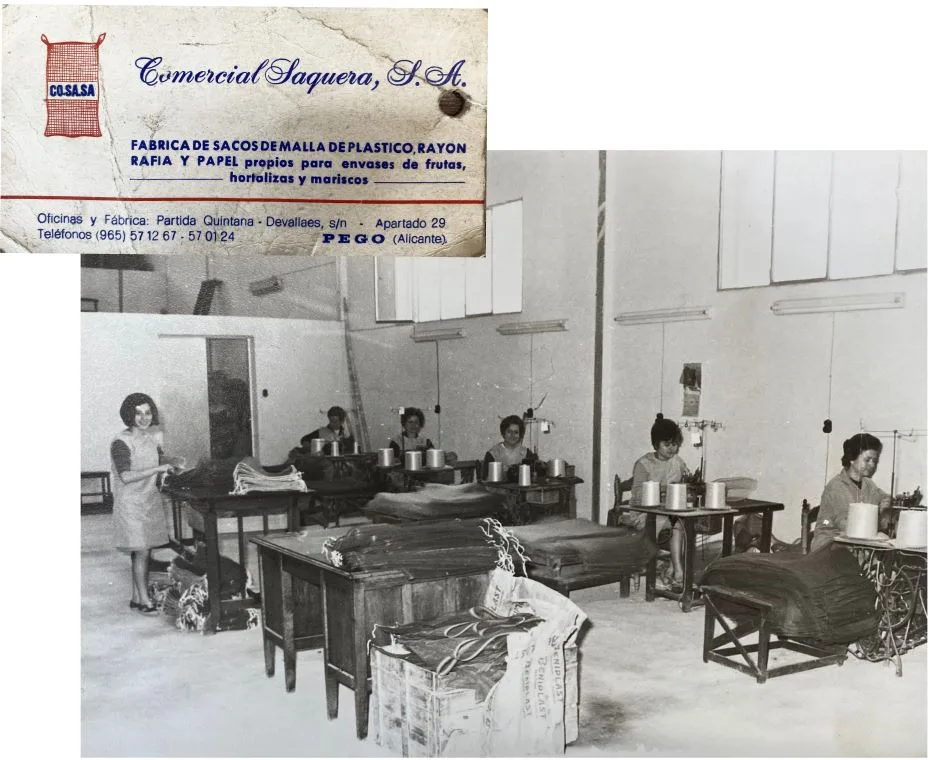
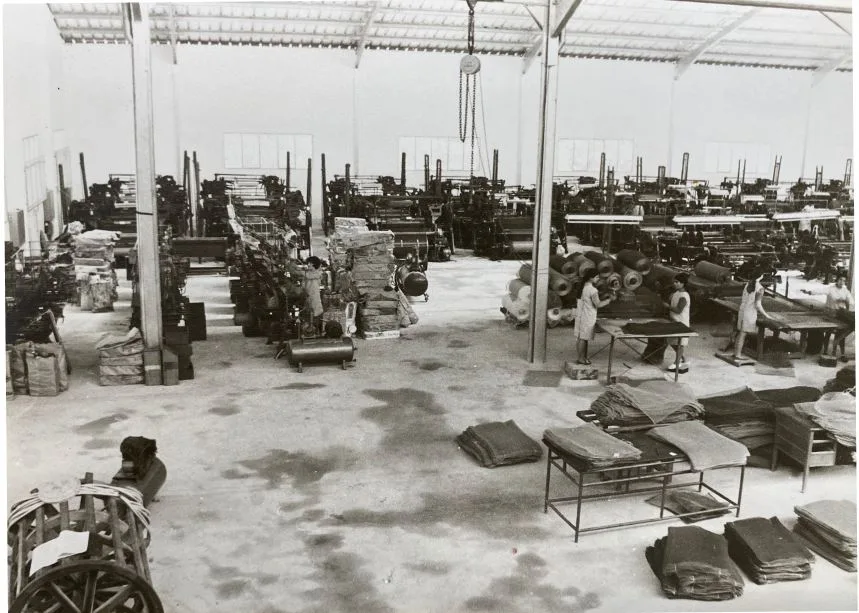
Responding to the growing demand for agrotextiles, insect netting and windbreak netting, Juan Ortola, anticipating market trends, decided to expand his production and enter the world of agrotextiles. This evolution complemented his already established sack manufacturing naturally, since both products serve the agricultural industry and share similar production processes and distribution channels. This step not only broadened his product line but also consolidated his position as a leader in providing innovative, quality solutions for Spanish agriculture.
1969
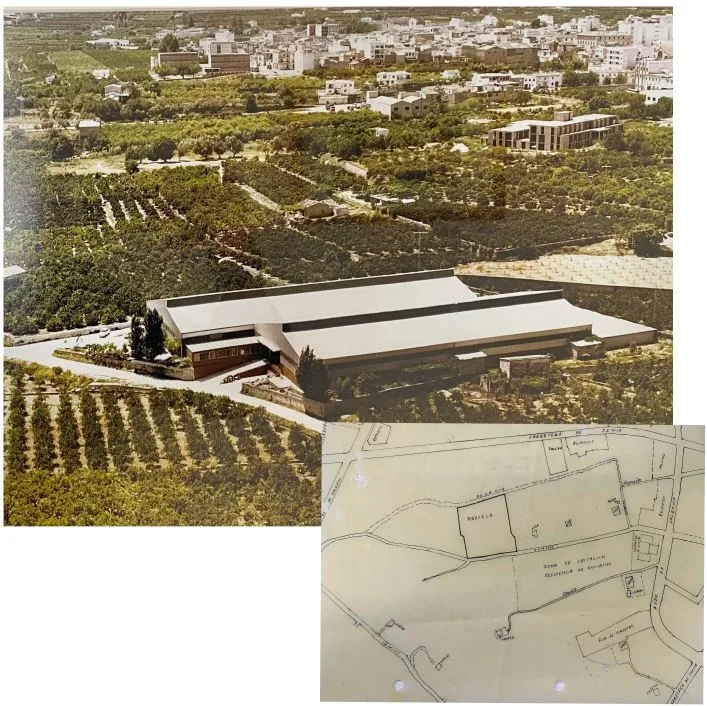
With the urban growth of Pego in the early 1970s, the surroundings of the old factory began to change. It became clear that the location was no longer suitable for the growing production volume. Juan Ortola therefore took the strategic decision to build a new industrial complex. This new site would not only allow greater production capacity to meet rising demand, but would also provide the space needed for future expansion, removing any constraints that might arise from a lack of room.
1970
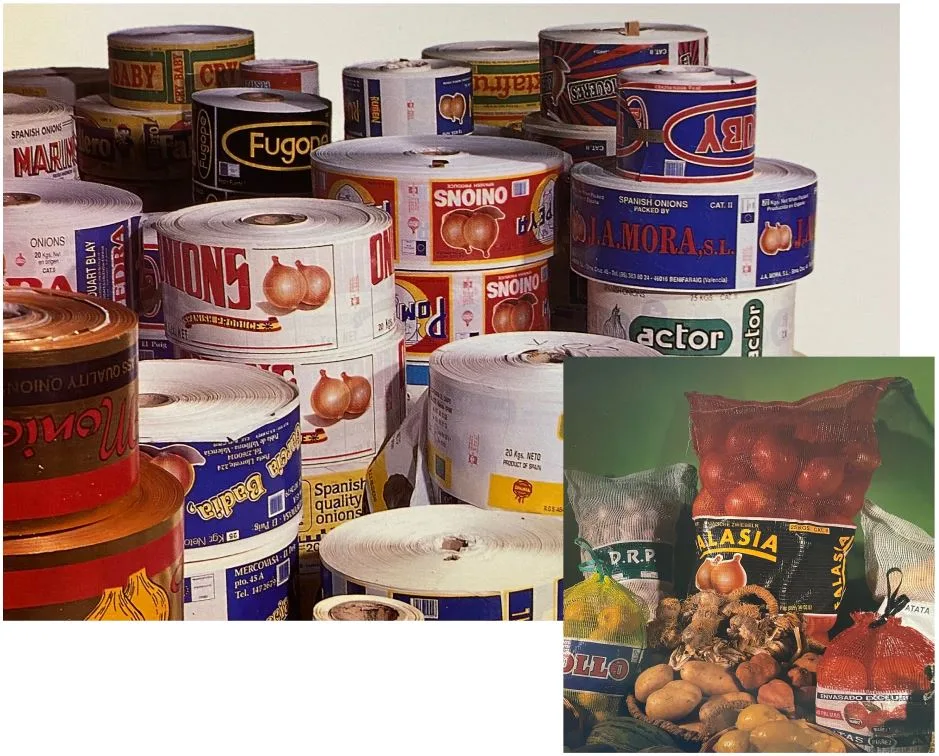
In the early 1970s, Textil Villa de Pego began producing sacks with custom printed bands, an innovation that allowed customers to display their product in a 100% personalised sack. This initiative was a response to the market's growing demand for custom packaging solutions that would let customers differentiate their products effectively.
1985
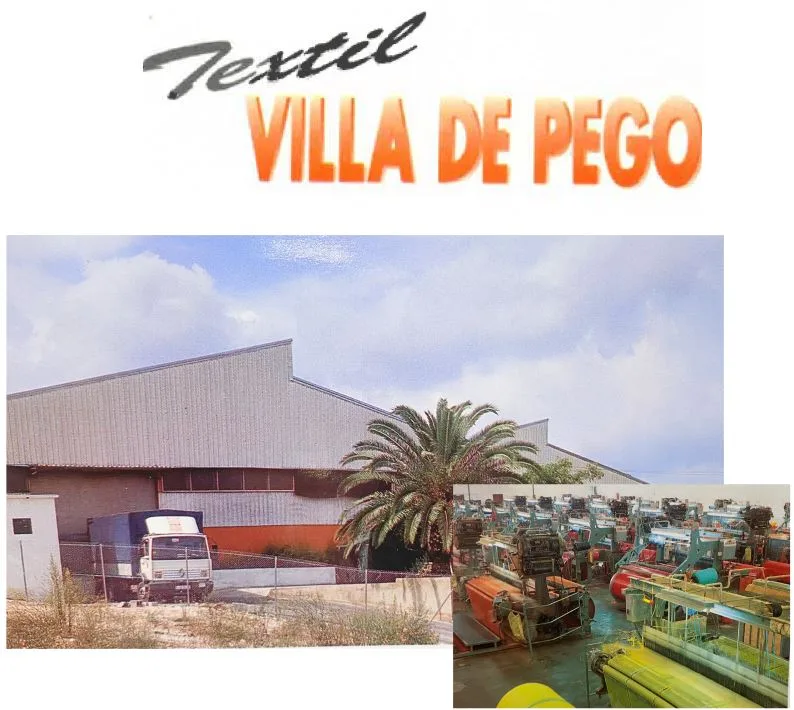
In the mid-1980s, as the company's product range expanded towards agrotextiles and sacks, it became clear that a change of identity was needed to better reflect its growing product diversity. Juan Ortola Siscar therefore decided to change the company's name from Comercial Squera SA to Textil Villa de Pego SL. This change not only encapsulated the company's evolution but also established a stronger link with the town of Pego, reflecting its commitment to its community and its integral role in the local economy. This renaming marked a milestone in the company's history, consolidating its position as a leader in the manufacture of agrotextiles and sacks, and establishing its identity as an innovative company in the agricultural sector.
1988
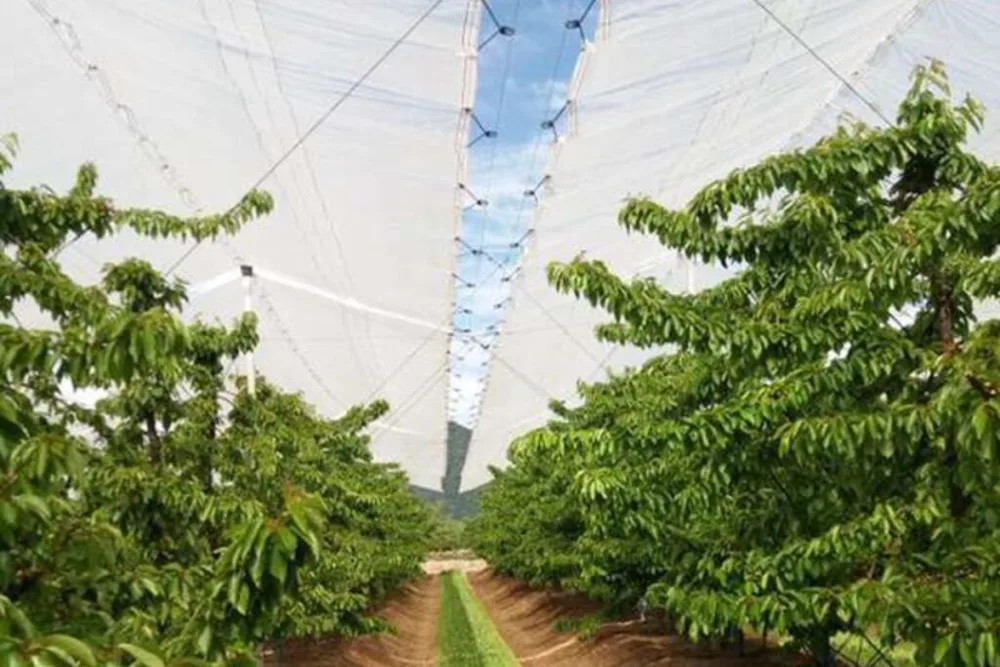
In 1988, Simon Ortola Domenech, son of Juan Ortola Siscar, joined the management of Textil Villa de Pego, taking on key responsibilities in the company's strategy and management alongside his father. His entry into management represented the continuation of his father's vision and a renewed commitment to innovation and growth. With a new generation at the helm, Textil Villa de Pego maintained its firm commitment to quality and excellence while preparing to face new challenges and opportunities in the changing landscape of the agrotextile industry. His presence in management ensured the continuity of the company's founding values and its dedication to customer service, while bringing fresh ideas and energy to the company's leadership.
1994
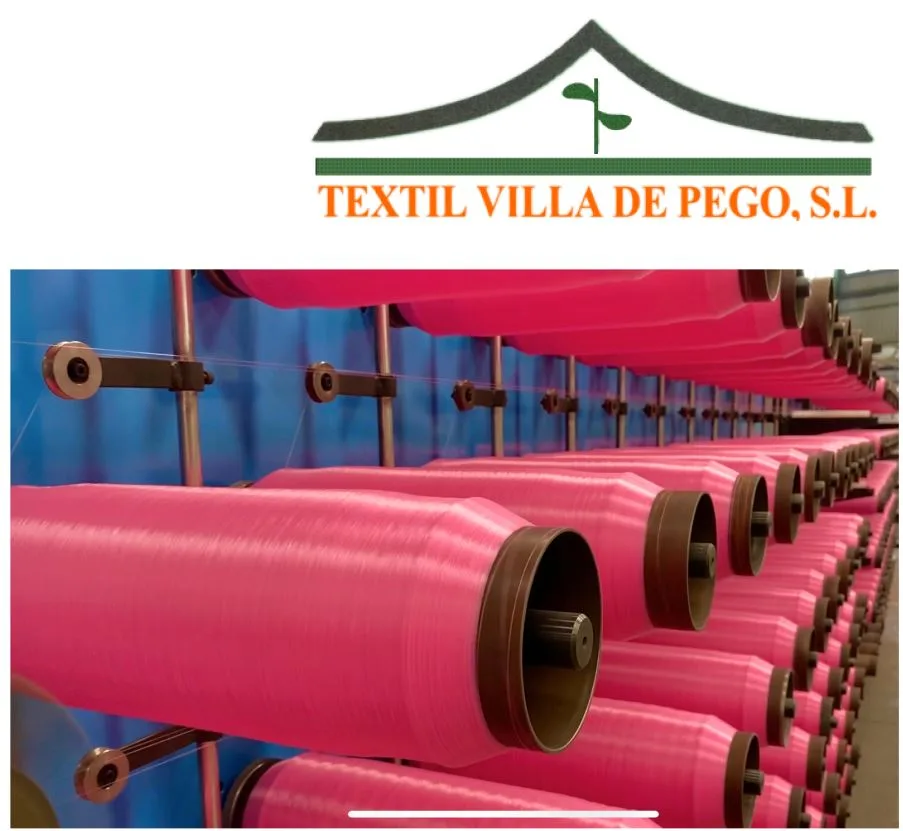
In 1994, Simon Ortola took the strategic decision to set up a monofilament and raffia extrusion plant. The aim behind this decision was to make Textil Villa de Pego self-sufficient in raw material of the very highest quality. The investment gave the company full control over production, guaranteeing an exceptional quality standard and greater efficiency across the supply chain. By producing its own fibres, the company could ensure the integrity and strength of its finished products, further consolidating its position as a benchmark in the agrotextile market. The extrusion plant proved to be a cornerstone of the continuous improvement of its products and of the company's sustainable growth.
2008
In 2008, Textil Villa de Pego reached an important milestone in its history with the appointment of Juan Ortola Domenech to the company's management. Juan, son of Juan Ortola Siscar and brother of Simon Ortola, joined the leadership team of the family business, bringing a fresh perspective and new energy to the running of the company. With this move, the management of Textil Villa de Pego passed into the hands of two brothers, strengthening the family vision of the business and securing the company's continuity for future generations. By joining forces, Simon and Juan Ortola Domenech drove the company towards new horizons while preserving the legacy and values of its founder.
Manufacturing
From raw material to finished product
The Textil Villa de Pego plant in Pego integrates all stages of the production process under one roof. Production begins with in-house extrusion of our own monofilament and raffia from high-density polyethylene (HDPE) and polypropylene (PP), continues with weaving in our own weaving plant (leno and shuttle looms), and concludes with cutting, in-house finishing and packaging for dispatch.
01
Extrusion
In-house extrusion of our own monofilament and raffia from HDPE and PP
02
Weaving
Our own weaving plant with state-of-the-art leno and shuttle looms
03
Finishing
In-house finishing (confección): custom cutting and perimeter reinforcements
04
Quality control
Tensile, UV and weight tests per batch
05
Packaging
Custom packing and labelling
Each production batch undergoes tensile strength, elongation, UV stability and weight per square metre testing. Results are documented and traceable to the raw material of origin. This protocol is part of our ISO 9001 quality management system.
R&D and Innovation
Applied research for more productive agriculture
Textil Villa de Pego maintains active research partnerships with leading institutions in technical textiles and agronomy. These collaborations enable the development of nets with specific properties — light diffusion, selective insect exclusion, thermoregulation — validated in real field trials.
Our technical department works with growers and cooperatives to identify needs not met by standard market products, developing solutions such as anti-hail nets with zip systems and high-ventilation aphid netting.
AITEX
Textile Technology Institute, Alcoy
AIMPLAS
Plastics Technology Institute, Valencia
University of Almeria
European leader in protected crop research
Cajamar Foundation
Agricultural research centre
Sustainability
Responsible manufacturing, material innovation
Manufacturing in the European Union means complying with strict environmental regulations: controlled industrial waste management, audited energy efficiency and regulated labour conditions. For Textil Villa de Pego, these are not aspirations — they are legal obligations that we fulfil and document. We go beyond what is required: our own 600 kW photovoltaic plant supplies part of our energy consumption.
Our R&D programme includes lines of work in post-consumer recycled materials, extending the service life of agrotextiles through advanced UV stabilisation, and design for recyclability at end of life.
Our own solar power
Own 600 kW photovoltaic plant for self-consumption
EU regulations
Manufacturing compliant with European environmental regulations
Recycled materials
R&D in polymers with lower carbon footprint
Extended service life
Advanced UV stabilisation for greater durability
Quality & environment
Certifications and quality standards
Textil Villa de Pego holds dual certification, audited and renewed by Bureau Veritas: ISO 9001:2015 (quality management system) and ISO 14001:2015 (environmental management system). Both cover the entire production chain: procurement, extrusion, weaving, finishing, finished-product control and dispatch.
All Textil Villa de Pego agrotextiles are manufactured in the European Union. UV resistance, tensile strength, elongation and weight tests are documented in each product's technical data sheet. ISO 14001 accredits our control over energy consumption, waste management, recyclability and reduced environmental impact.
ISO 9001:2015
Quality management system
Bureau Veritas
ISO 14001:2015
Environmental management system
Bureau Veritas
Made in EU
Complete manufacturing in the European Union
Pego, Alicante
Global Presence
From Pego to over 30 countries
Textil Villa de Pego agrotextiles and bags protect crops and package agricultural products in Europe, North Africa, Latin America, North America and the Middle East. We export directly and through a network of established distributors in each market.
30+
Countries
77+
Years
Western Europe
Spain, France, Italy, Portugal and more
Central Europe
Germany, Austria, Switzerland, Netherlands and more
North Africa
Morocco, Tunisia, Algeria and more
Latin America
Mexico, Chile, Peru, Colombia and more
North America
United States and Canada
Middle East
Saudi Arabia, UAE, Jordan and more
Careers
Want to join the team?
Textiles is a craft learned on the job: send us your application and we will get in touch when a position opens up.
Let’s talk about your project
Receive a personalised quote within 24 hours. No obligation.
WWW.TEXTILVPEGO.COM
Manufacturers since 1949